Wellbeing Bags
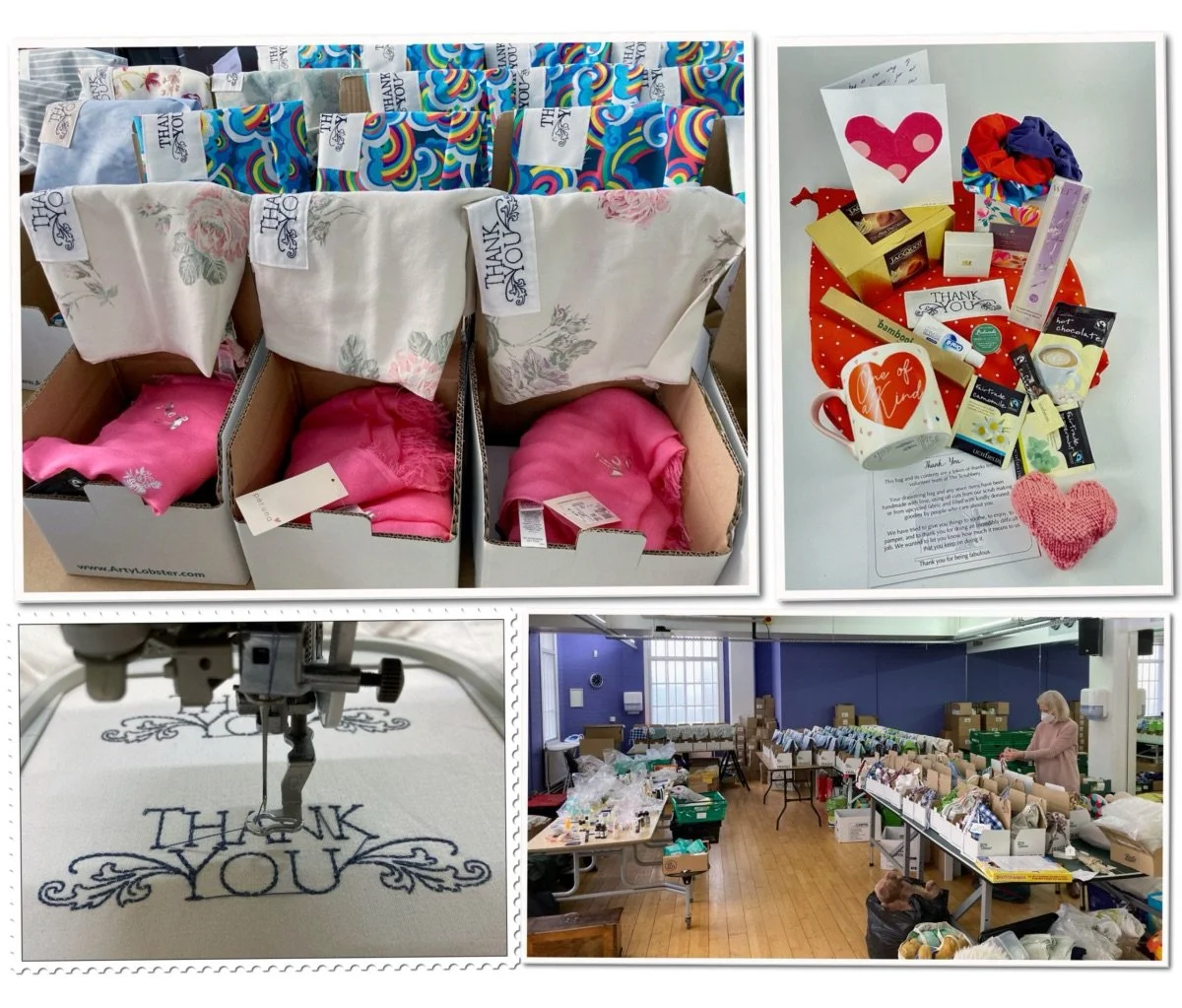
Alongside sewing scrubs, we recognised early on that practical protection was only part of the picture. Many frontline teams were exhausted, under immense pressure and often overlooked when it came to small gestures of support. In response, we created our Wellbeing Bags which are simple, thoughtful packages designed to lift spirits and show appreciation.
We work closely with representatives within hospitals, who take a targeted and considered approach to distribution. Bags are allocated to teams who have faced particularly challenging circumstances. This ensures that the bags reach those for whom they will make a meaningful difference.
Each bag is hand-packed and typically shoe-box sized, filled with donated items chosen specifically because staff told us they would help; small comforts, practical treats and thoughtful touches that acknowledge the intensity of their work. They are, quite simply bags of thanks from the community.
We welcome donations for these bags or connections to suppliers who may wish to donate suitable surplus stock.
If you know of a team that would benefit from receiving Wellbeing Bags, you can get in touch via our contact form or submit a request directly through our online request form. Donations can be dropped at The Scrubbery or collection can be arranged by contacting us.
These bags are a reminder that care runs both ways. Every contribution large or small becomes part of a collective gesture of gratitude, helping frontline staff feel seen, valued and supported. We would like to particularly thank 3 firms who have generously sponsored our wellbeing bags: This Works, Balmonds and the Friendly Soap Company.
Children’s Quilts
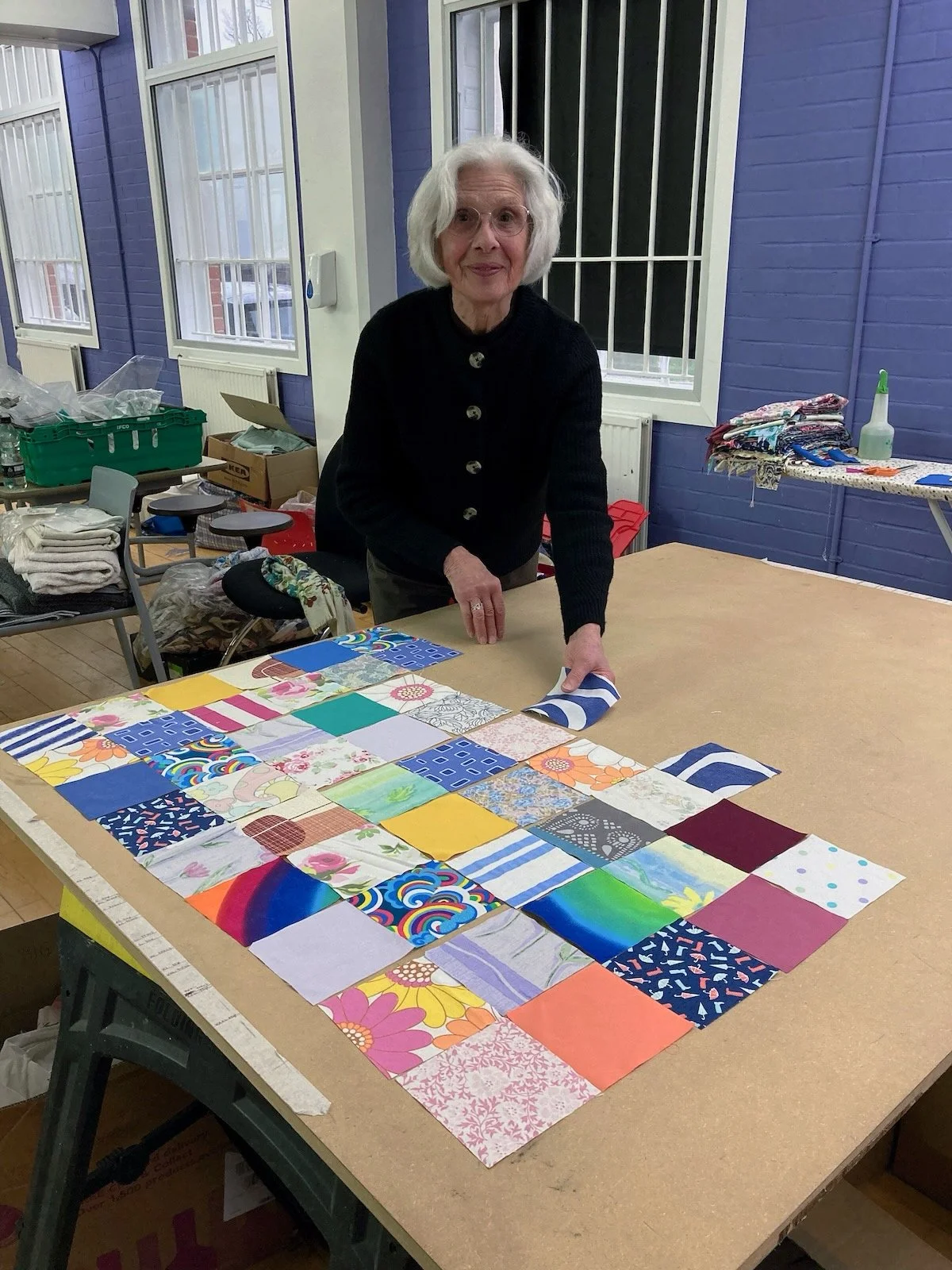
Our children’s quilts grew naturally from our sewing work and our commitment to using materials responsibly. Using scrub off-cuts and donated fabric, our volunteers piece together bright, carefully stitched quilts designed to provide warmth, comfort and reassurance to children facing illness, displacement or crisis.
Many of these quilts are made in partnership with Project Linus and are donated to hospitals including Evelina London Children’s Hospital, where they offer a small but meaningful source of comfort during treatment. Others travel further afield as part of our humanitarian shipments to Ukraine, where they are distributed to orphans, displaced families and children undergoing medical care.
Each quilt is handmade: cut, pieced, stitched, quilted, bound and finished by volunteers who understand that beyond its practical warmth, a quilt carries a message: someone has taken time to make this for you. For children in uncertain circumstances, that gesture of care matters.
This project also ensures that even the smallest fabric remnants are put to good use. What begins as an off-cut becomes something delightful, protective and reassuring.
Drawstring and Tote Bags for Wandsworth Foodbank
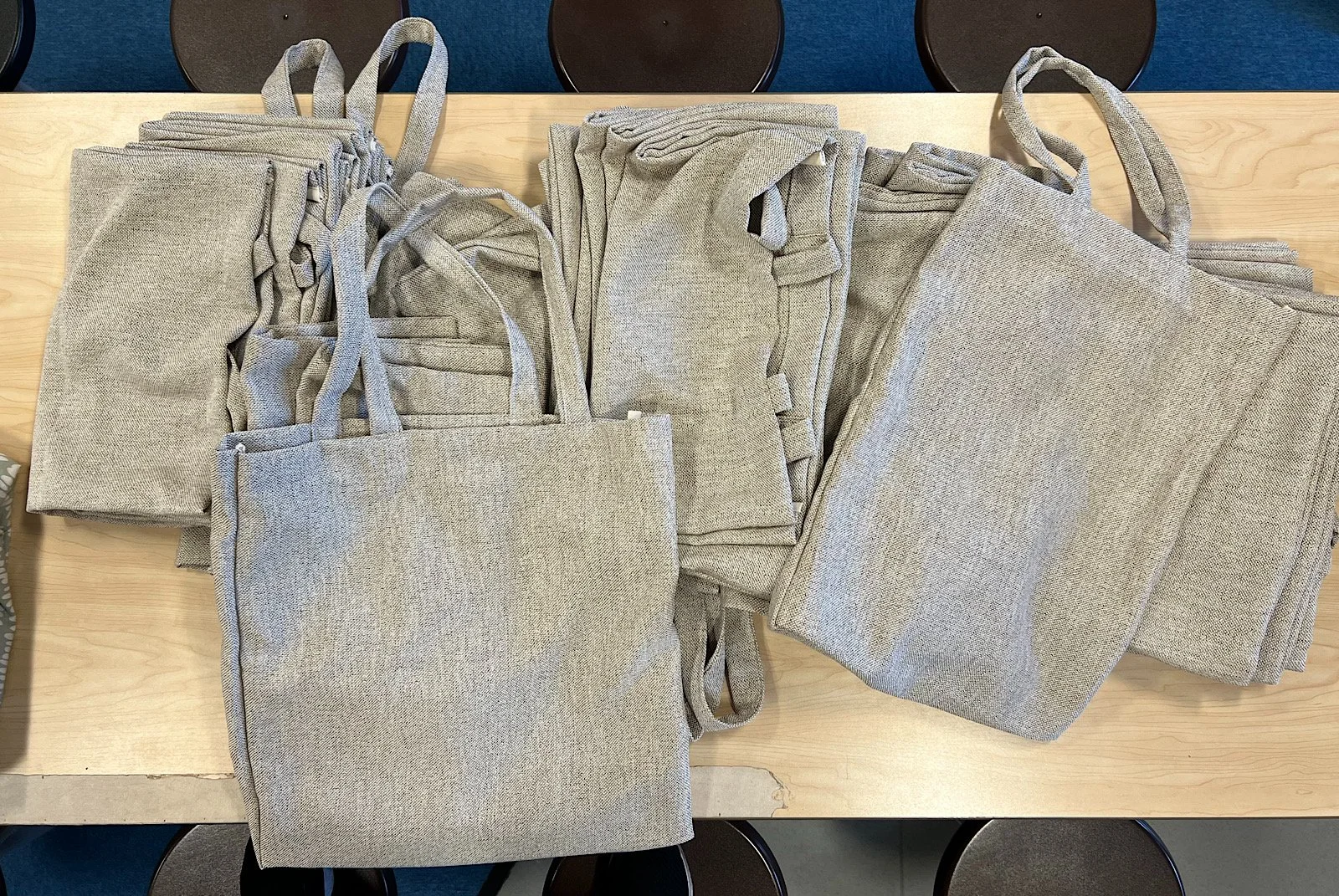
In partnership with Wandsworth Foodbank, we make durable, reusable bags to help pack and distribute essential supplies with dignity and practicality. Rather than relying on single-use plastic, these bags provide clients with something sturdy and long-lasting that can be used again and again.
Our drawstring bags are made from upcycled pillowcases: simple, effective and washable. They are transformed by our volunteers into strong, lightweight carriers suitable for food and household essentials. Our tote bags are created from high-quality curtain fabric generously donated by The Curtain Tailor, repurposing surplus material into robust shopping-style bags capable of carrying heavier items.
This project reflects our commitment to sustainability as well as community care. By upcycling donated textiles and reducing waste, we are able to support Wandsworth Foodbank in a practical way while also ensuring that recipients leave not only with essential provisions, but also with a reusable bag they can keep.

Scrub Hats
Scrub hats were one of the earliest and most requested items we began making alongside scrubs. Designed for use in theatres, wards and clinical settings, they provide comfort, hygiene and practicality for healthcare staff working long shifts.
True to our ethos of minimising waste, our scrub hats are made from fabric off-cuts and upcycled bed linen that would otherwise go to landfill. By carefully selecting, washing and repurposing these materials, we transform surplus textiles into durable, washable and hard-wearing hats suitable for clinical environments. It is a practical solution that supports both sustainability and frontline need.
We sent sample scrub hats to three London hospitals with two clear aims: to help reduce costs by moving away from disposable hats, and to provide better-fitting alternatives that accommodate all head shapes, hair types and styles. Whipps Cross University Hospital was the first to respond with a request for hats of a particular design, which is an encouraging step towards broader adoption.
St George’s Hospital have requested and received thousands of our scrub hats made from our distinctive brightly coloured upcycled fabrics, supporting their move towards reducing the use of disposables in operating theatres. Using reclaimed materials not only diverts fabric from landfill but also significantly reduces waste: for every 1,000 reusable hats we supply, we help prevent an estimated 52,000–60,000 disposable hats from entering the waste stream.
Each hat is cut into prepared kits and sewn by volunteers working to refined patterns developed in consultation with clinicians. This project reflects what we do best: listening to need, responding with expertise, and combining environmental responsibility with practical impact.
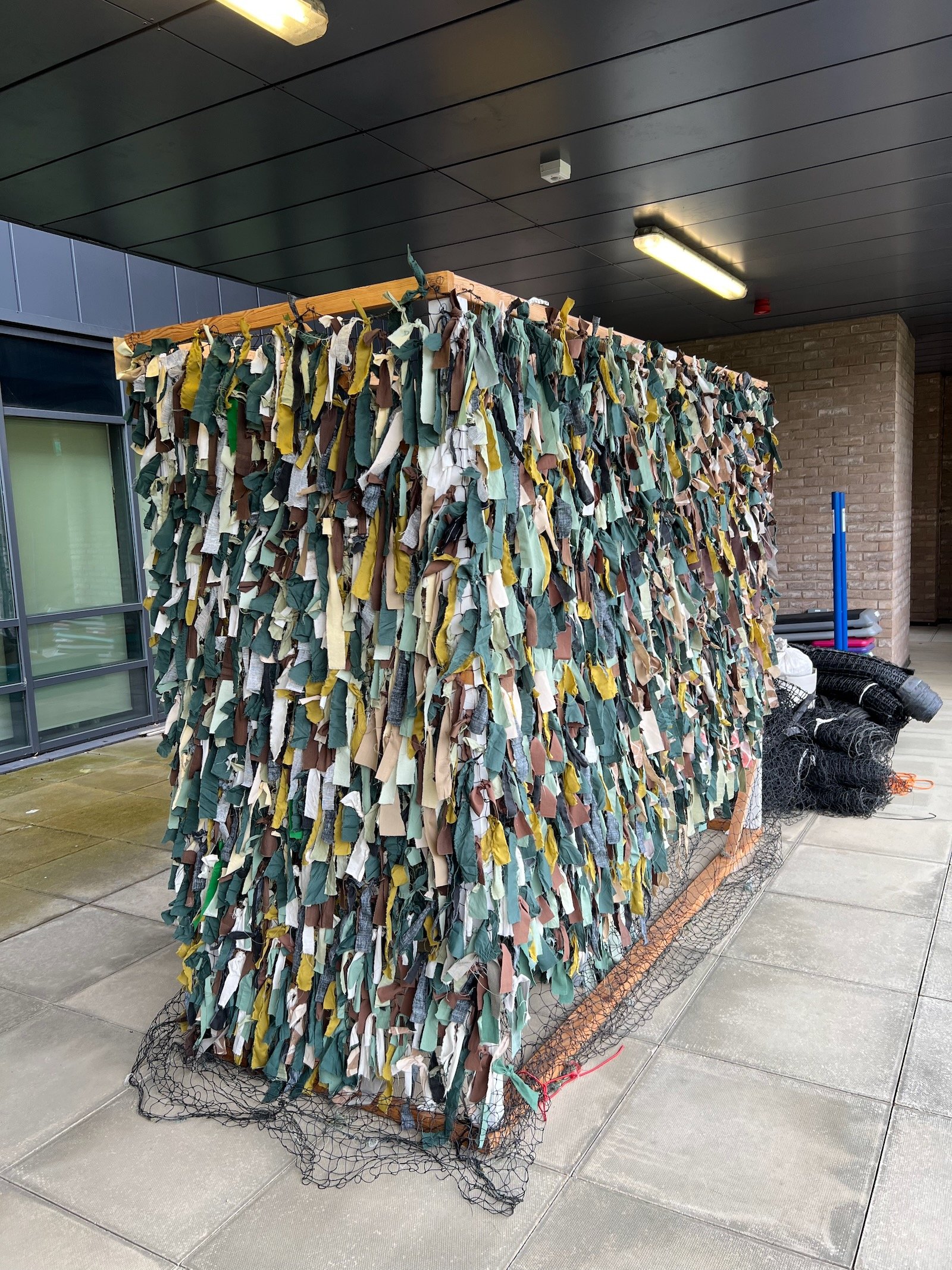
Camouflage Nets
Shortly after the war in Ukraine began, we saw museum colleagues in Lviv making camouflage netting to disguise statues and protect cultural landmarks around the city. It quickly became clear that this was not only about shielding history. The need spread across the country to protect the living too: people, vehicles, medical posts, transport routes and vital supplies.
By that point, The Scrubbery was already supplying scrubs to field hospitals, so extending our support to camouflage nets felt like a natural progression. We also had the materials to act quickly: quantities of 100% white cotton sheets that weren’t suitable for scrubs, along with rolls of brown and beige cloth. We began dyeing, cutting and repurposing these textiles into practical camouflage, turning the surplus into something essential.
Camouflage netting has also become one of our most accessible ways to involve people who do not sew. It is hands-on, purposeful and easy to learn, making it ideal for volunteers of all ages and abilities. We regularly run net-making sessions at the hub, and we also organised corporate camouflage net days, inviting companies to spend a day working with us, which is both mindful and engaging as a team effort.
It is another example of “the sum of the littles”: many hands doing small tasks that, together, make a real difference on the ground.
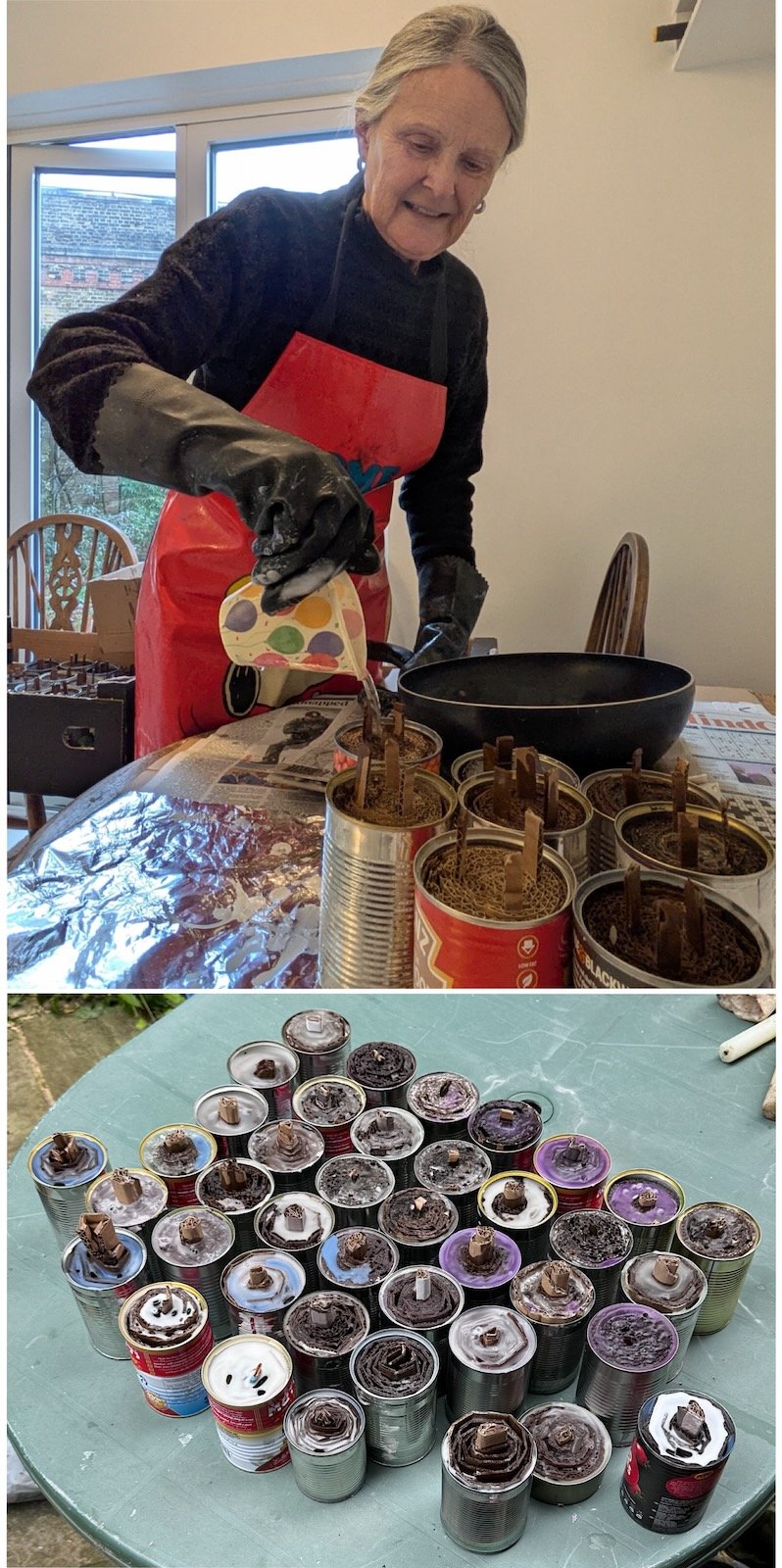
Trench Candles & Firestarters
As the war in Ukraine has continued, we have responded not only to medical need but also to the realities of disrupted infrastructure and harsh winter conditions. In areas where electricity, heating and cooking facilities are unreliable or unavailable, simple, low-tech solutions can make a significant difference.
In response, we began making trench candles and fire starters, which are practical, robust heat sources that can be used for warmth, light and basic cooking. Trench candles are typically made using recycled tins filled with tightly rolled plain corrugated cardboard and wax, creating a compact and efficient burner. They are simple to transport, safe to store and effective in difficult conditions. Fire starters, made from repurposed wax and cotton wool balls, help ignite wood swiftly and reliably in the field.
Like our camouflage nets, this work provides a meaningful role for volunteers who may not sew. Preparing tins, rolling cardboard, melting and pouring wax - each task contributes to a finished product that has immediate practical value. It is hands-on, purposeful and accessible to a wide range of ages and abilities.
These items are included within humanitarian aid shipments and convoy vehicles travelling to Ukraine, particularly during the colder months. They represent another example of how we use donated and surplus materials responsibly, turning everyday items into something protective and useful.
Small, simple and made with care, trench candles and fire starters embody our approach: practical action, collective effort and support that meets real conditions on the ground.
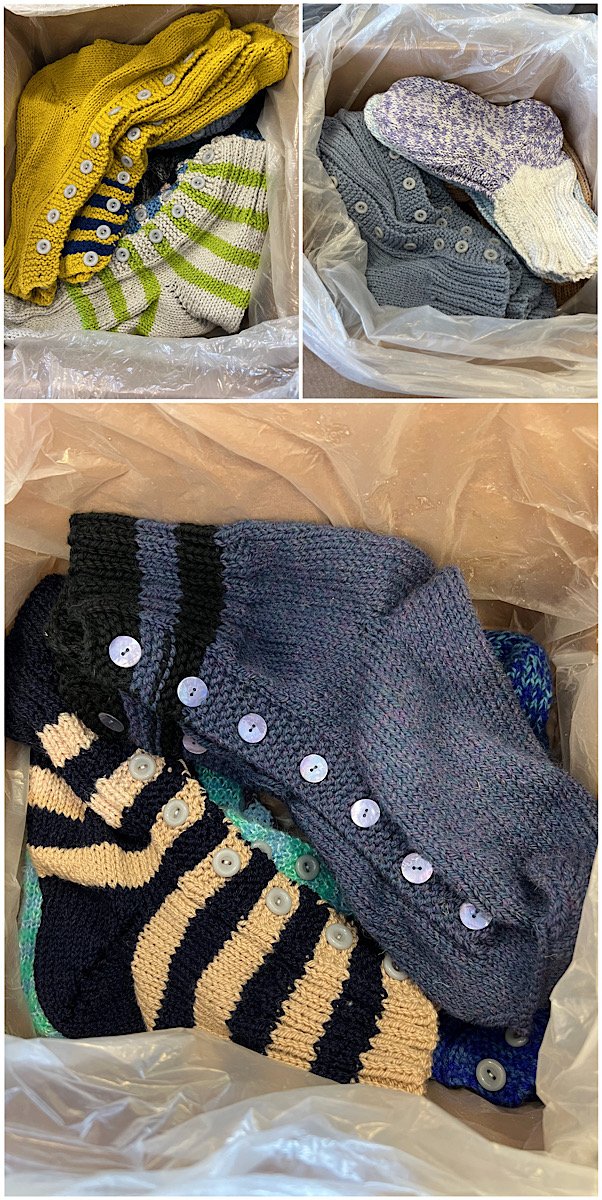
Cast Socks
Our knitted cast socks project began in response to a very specific and practical need identified by clinicians. Patients with lower-limb casts, and those undergoing complex orthopaedic treatment, often struggle to keep exposed toes warm and protected, particularly during colder months.
We have a knitting pattern which has been honed by our knitting team and is designed to fit comfortably over plaster casts or orthopaedic boots. They provide warmth, help keep casts clean, and offer a small but meaningful improvement in comfort and dignity for patients navigating long recovery periods.
As with all of our medical garments, cast socks are made from donated or sourced materials as outwork by many people nationwide. We can stitch the buttons on in-house for those of you who would rather just knit.
The finished items are boxed and go on the convoys, and then posted for free via Nova Poshta to a hospital in Ukraine from where they are distributed nationwide.
This project reflects the way The Scrubbery works at its best by listening to practical need, and responding with skill and care, focusing on details that make everyday life just a little easier for someone facing a medical challenge.
The pattern for the cast socks can be found on the Downloads page.
Our Awards
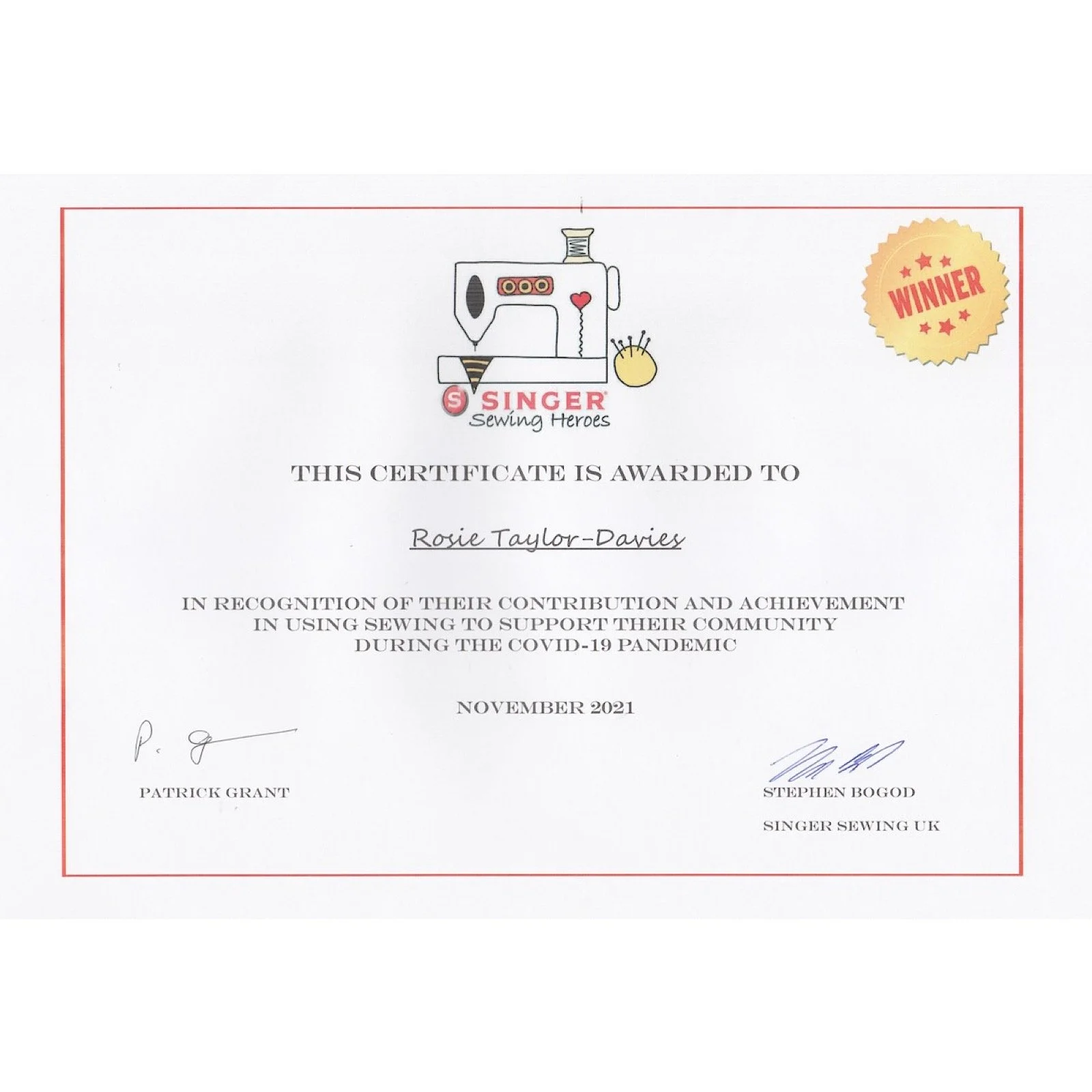
The Scrubbery has received a number of awards for its work, which represent the work of the whole team. Rosie has provided a platform since February 2020, for hundreds of thoughtful people to make a serious contribution supplying scrubs and other necessary items to every London hospital trust, and further afield, plus at least 50 GP practices and their associated care homes, as well as vaccination clinics all over London.
We have machinists in their 90s as well as teenagers whom we have taught to sew, students from local schools doing community service for their Duke of Edinburgh awards, and volunteer riders shuttling items all over the country. People and organisations donating time, money, sewing machines and luxury contents for our wellbeing bags, which we have been assembling to give encouragement and thanks to exhausted healthcare workers.
The Scrubbery has provided a source of focus and community for its volunteers throughout the pandemic, giving a sense of purpose and achievement. This has been an inspiring team effort, and thanks are due to so many, in particular the Parish of Putney, the Bank of England and Oasis Academy Putney for providing premises for us to work from as our cutting and sewing.
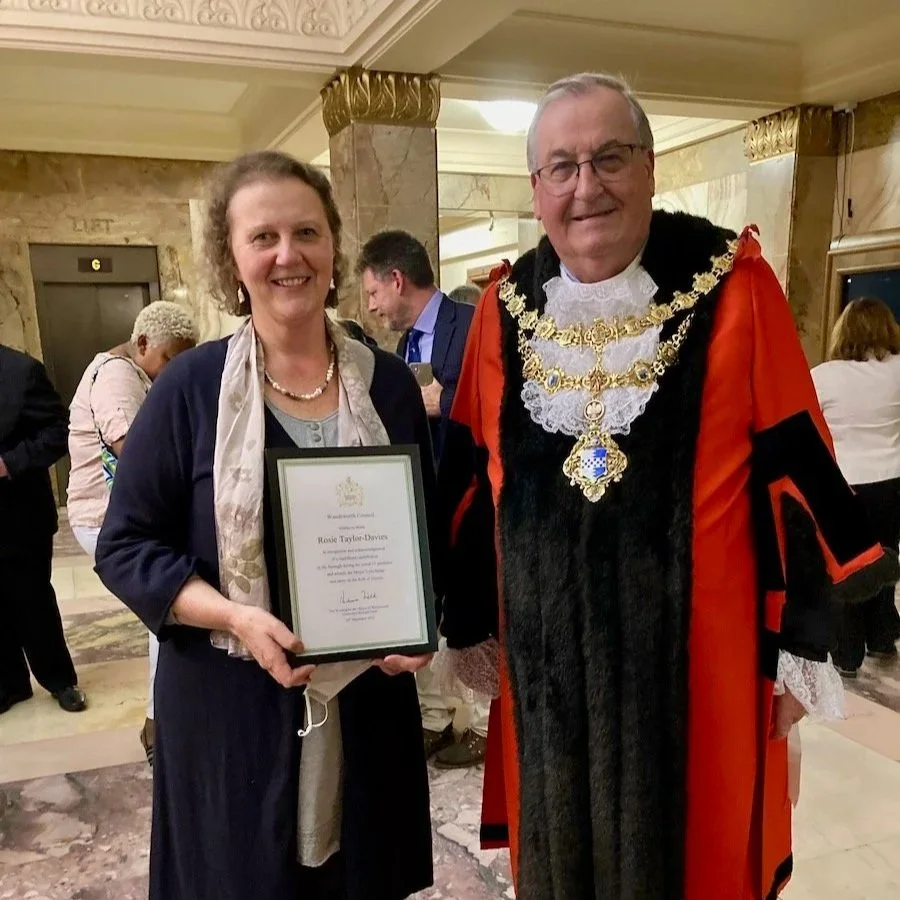
Wandsworth Civic Award
Details in November news update.
Singer Sewing Machine Hero
More details in November news update.
Wandsworth Community Hero
See October News update.
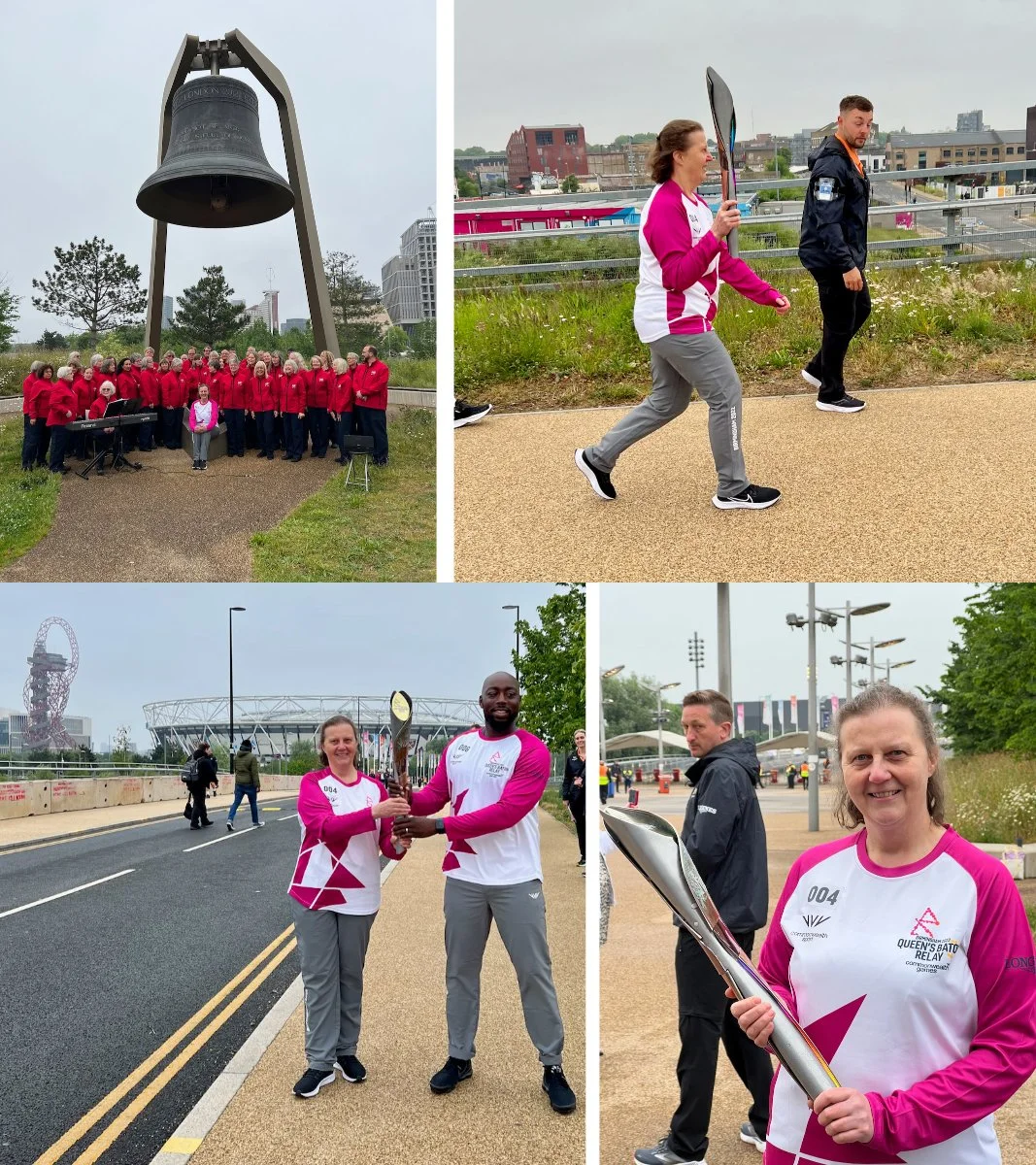
Commonwealth Games Baton Relay
See News Update
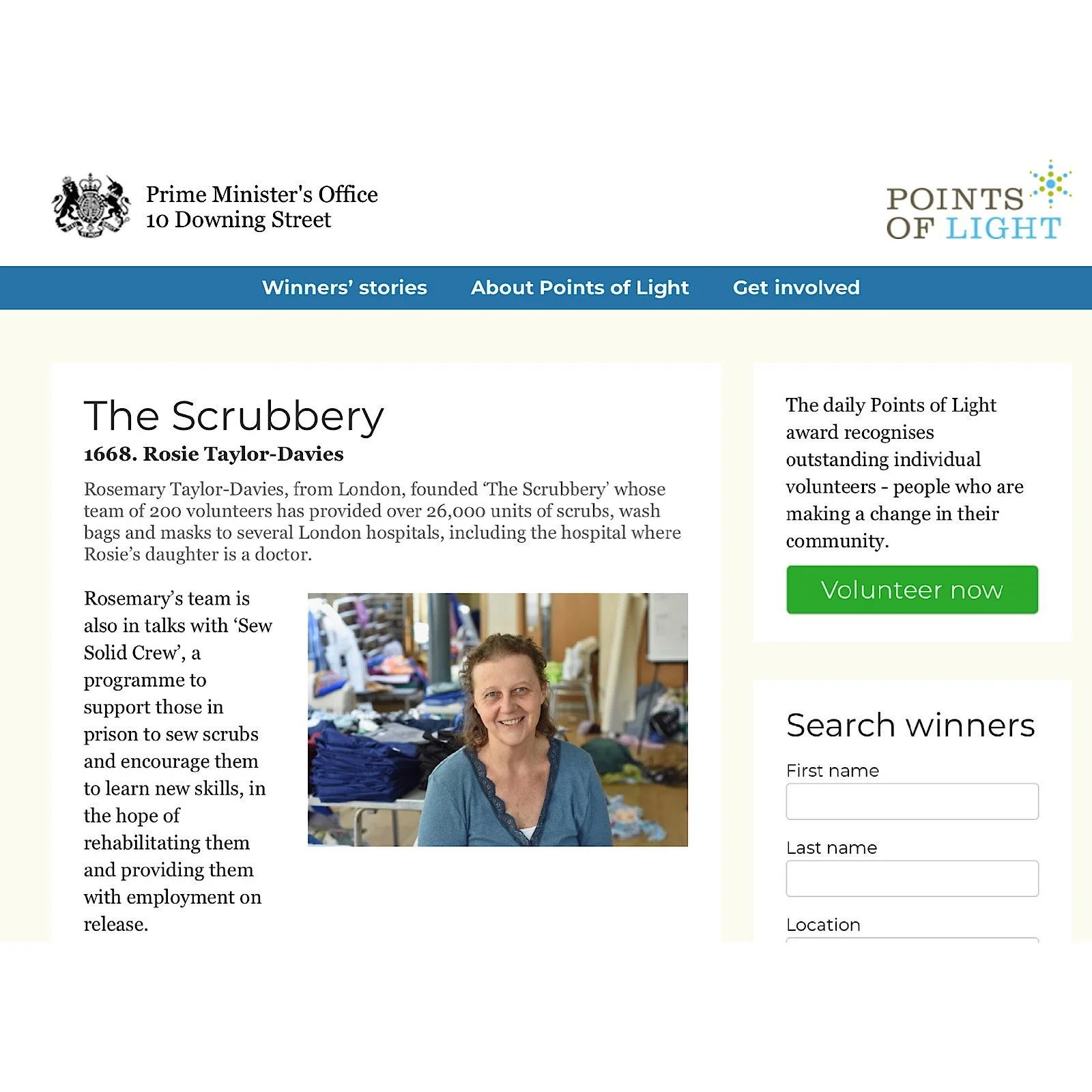
UK Points of Light
See July News update.
2020 Heroes Campaign
See January News update.
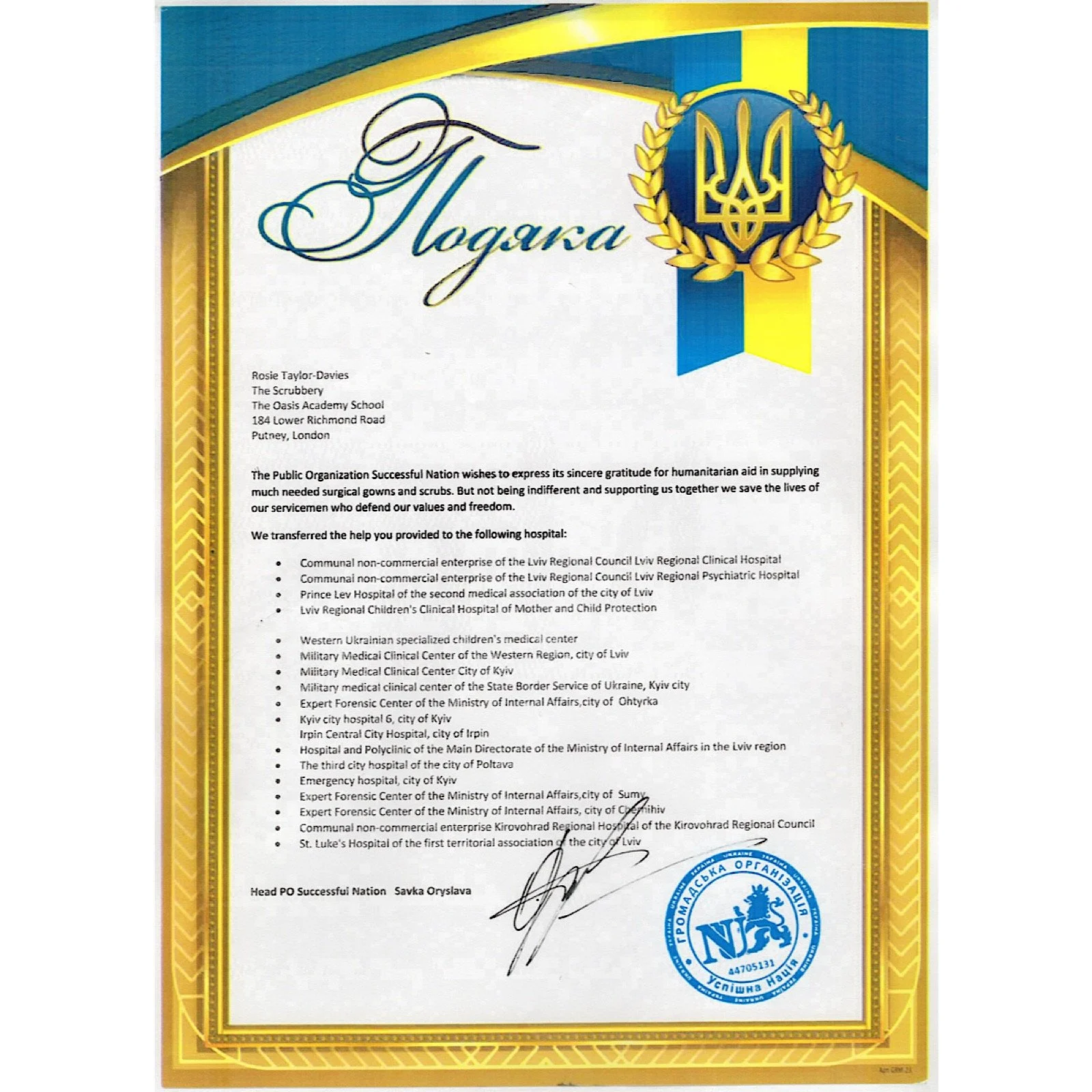
NGO Special Nation
See News Update